

Interior Design
Space planning, materials and rendering.
What this major can become
Real roles our students grow into, the industries that hire them — and why this path is a good bet.
Jobs you can do
- Interior Designer
- Exhibition / Retail Designer
- Lighting Designer
- Stylist & Staging
Industries that hire
Design studios, hospitality & retail, real-estate staging, residential design
Why it’s a good bet
- Client work starts early — many designers freelance before graduating
- Every home, restaurant and office is a potential project
- Combines spatial thinking with materials, colour and people skills
Recommended schools
Programs our Interior Design students most often apply to — and get into.



How to build an Interior Design portfolio that gets in
Interior design is about how spaces feel and work for real people. A strong portfolio shows you notice materials, light and everyday behaviour, and can turn those observations into ideas.
- 01
Start with how people use space
Show that you think about who lives, works or gathers in a room and what they need. A simple study of how your family uses the kitchen can say more than a glossy mood board.
- 02
Sketch real interiors from life
Draw cafés, libraries, classrooms and your own home. Observational sketches prove you understand perspective, proportion and how furniture sits in a room.
- 03
Explore materials and colour hands-on
Collect samples, make material boards and test colour palettes. Schools like to see that you understand texture, finish and how light changes a surface.
- 04
Build a small model or mock-up
A scaled room model, furniture prototype or lighting test shows three-dimensional thinking. Photograph it carefully so the space reads clearly on screen.
- 05
Show your design process, not just results
Include rough sketches, plan studies, alternatives you rejected and notes on why. Admissions readers want to see how you arrive at a decision.
- 06
Keep fine art in the mix
Many programs still value general art skills. Drawing, painting or photography that shows a good eye for composition and colour supports your design work.
Common mistakes to avoid
- Relying on Pinterest-style mood boards made from other people's images
- Treating interior design as decorating instead of problem-solving
- Showing renders with no sketches, plans or reasoning behind them
Want to know where your portfolio stands?
Bring your current work to a free review — a mentor will tell you the most useful next step.
What you'll learn
A staged path — fundamentals first, then specialization, then the portfolio itself.
Foundation training
Spatial skill is built on drawing, not software.
- Observational drawing and still life
- Perspective and interior spatial construction
- Proportion, scale and human measure
- Light, shadow and atmosphere
- Colour, material and texture studies
- Composition and drawing as communication
- Sketchbook and space-observation habit
Interior specialization
Designing space people move through.
- Space planning and circulation
- Drafting plans, sections and elevations
- Materials, finishes and mood boards
- Lighting design and mood
- Interior perspective rendering
- Scale model building and a full project
Portfolio & application
Drawing-led, process-heavy, clearly presented.
- Curating a drawing-led interior portfolio
- Documenting process and iteration
- School-specific requirements (Parsons, RISD, OCAD)
- Artist statement and design rationale
- Photographing models and portfolio layout
- Mock interviews and portfolio reviews
Why students choose NPC
Portfolio prep is crowded. What is rare is a twenty-year record of actual offers, and mentors who have done the job.
20+ years and 3000+ graduates
Offers from Harvard, Cornell, RISD, Carnegie Mellon, Parsons, ArtCenter and USC — 900+ university offers and $60M+ in scholarships since 2007 — every year since 2012 published school by school.
Mentors from the industry
Art directors and artists whose work spans Disney and Nickelodeon films, LEGO films, Tencent and AAA games — people who know what a portfolio has to survive.
Fundamentals first, always
Admissions committees reject weak drawing before they ever reach your concept. We build observation, perspective, value and colour before specializing.
Built to each school’s requirements
CSM, Parsons, RISD and Sheridan all ask for different things. We build to the schools you are actually applying to — not a generic portfolio.
Interior Design — made by our students
 Interior DesignPortfolio Development
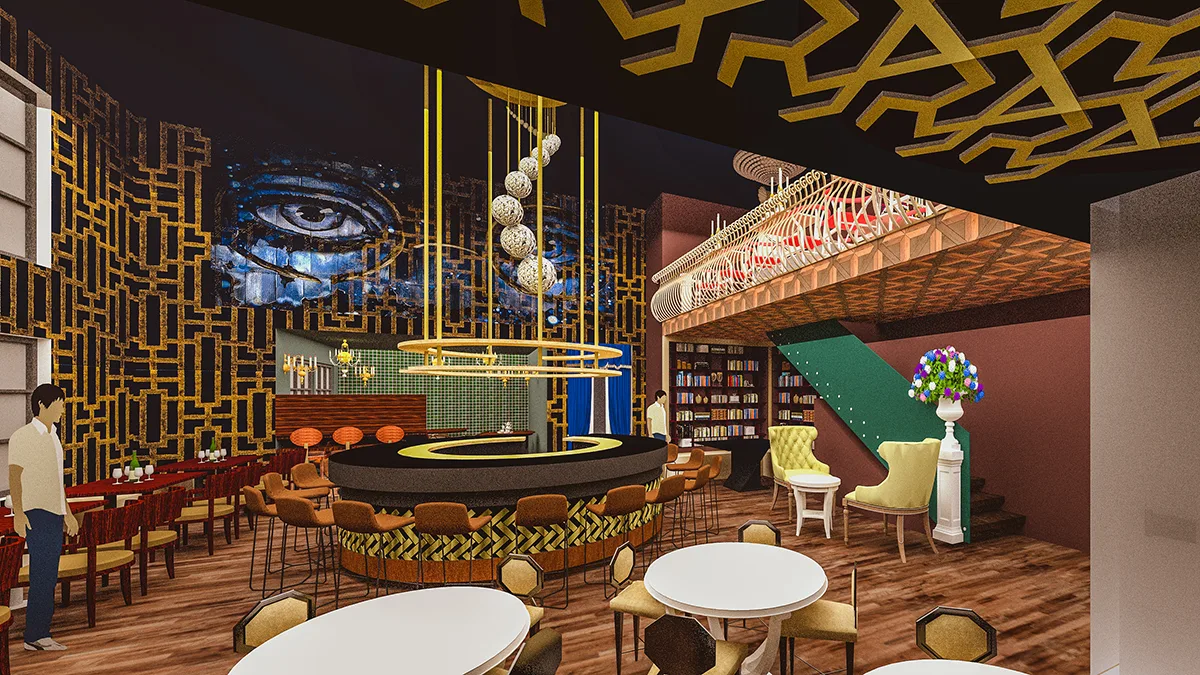 Interior design — restaurant visualisationPortfolio Development
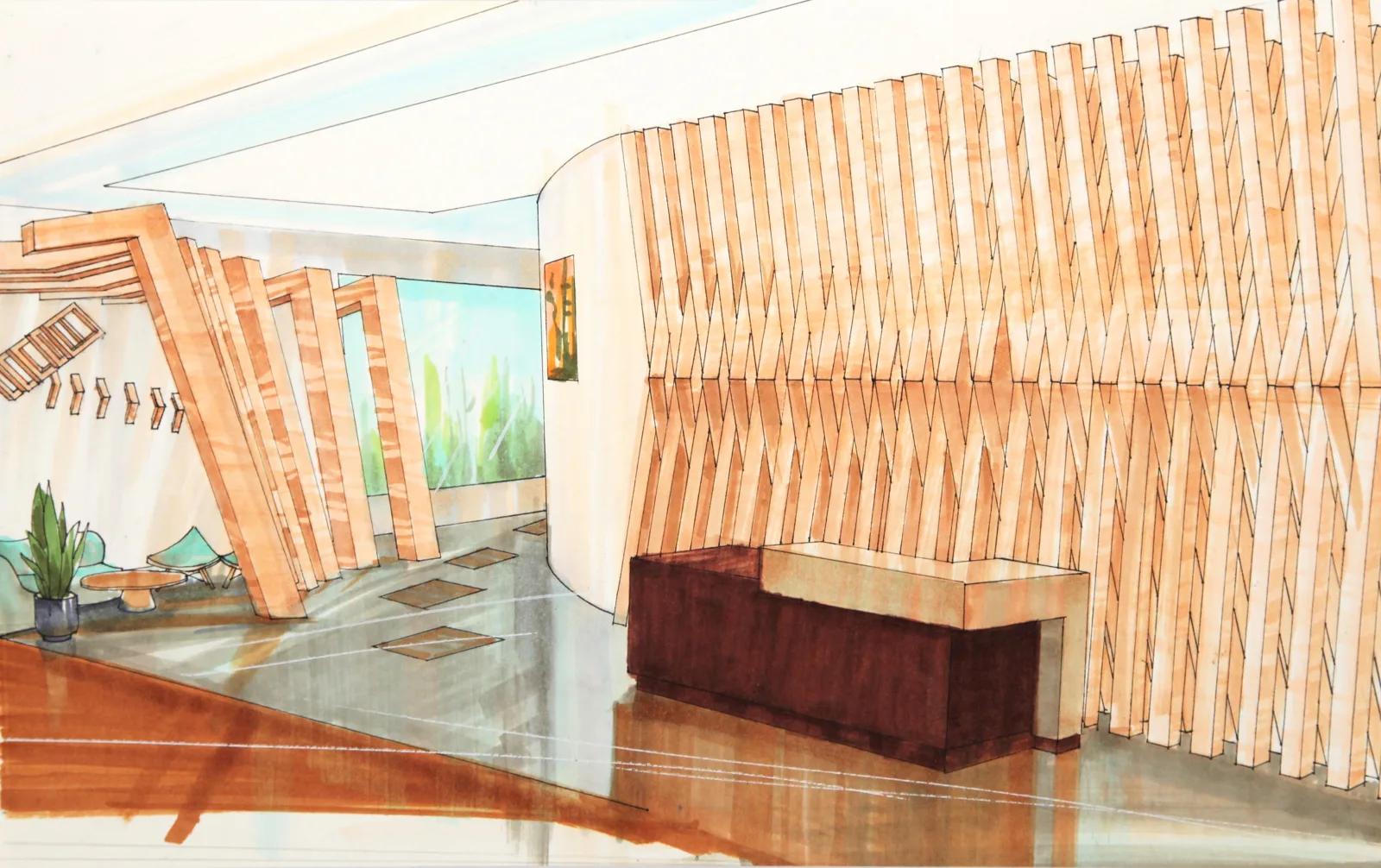 Interior DesignPortfolio Development
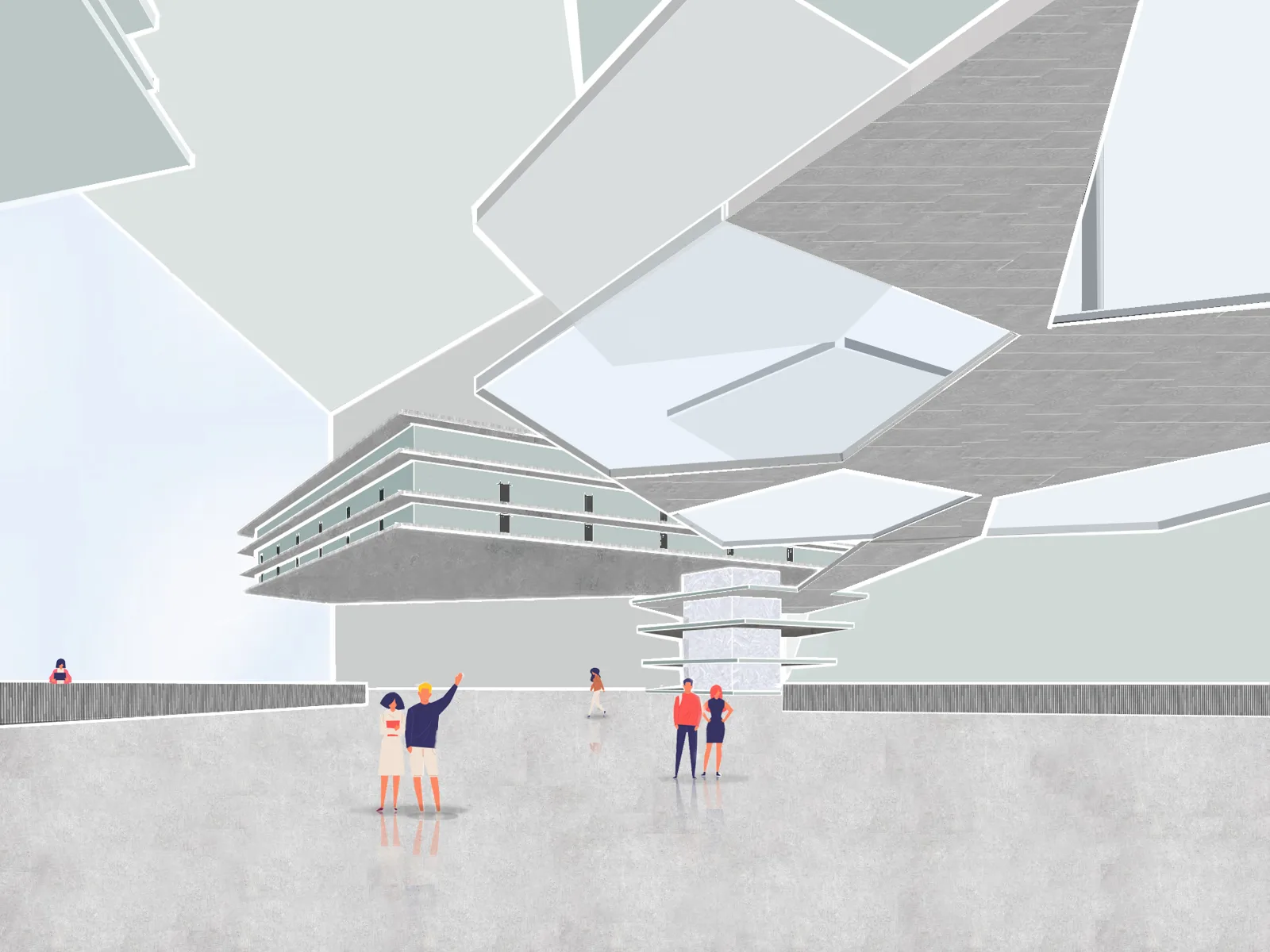 Interior DesignPortfolio Development
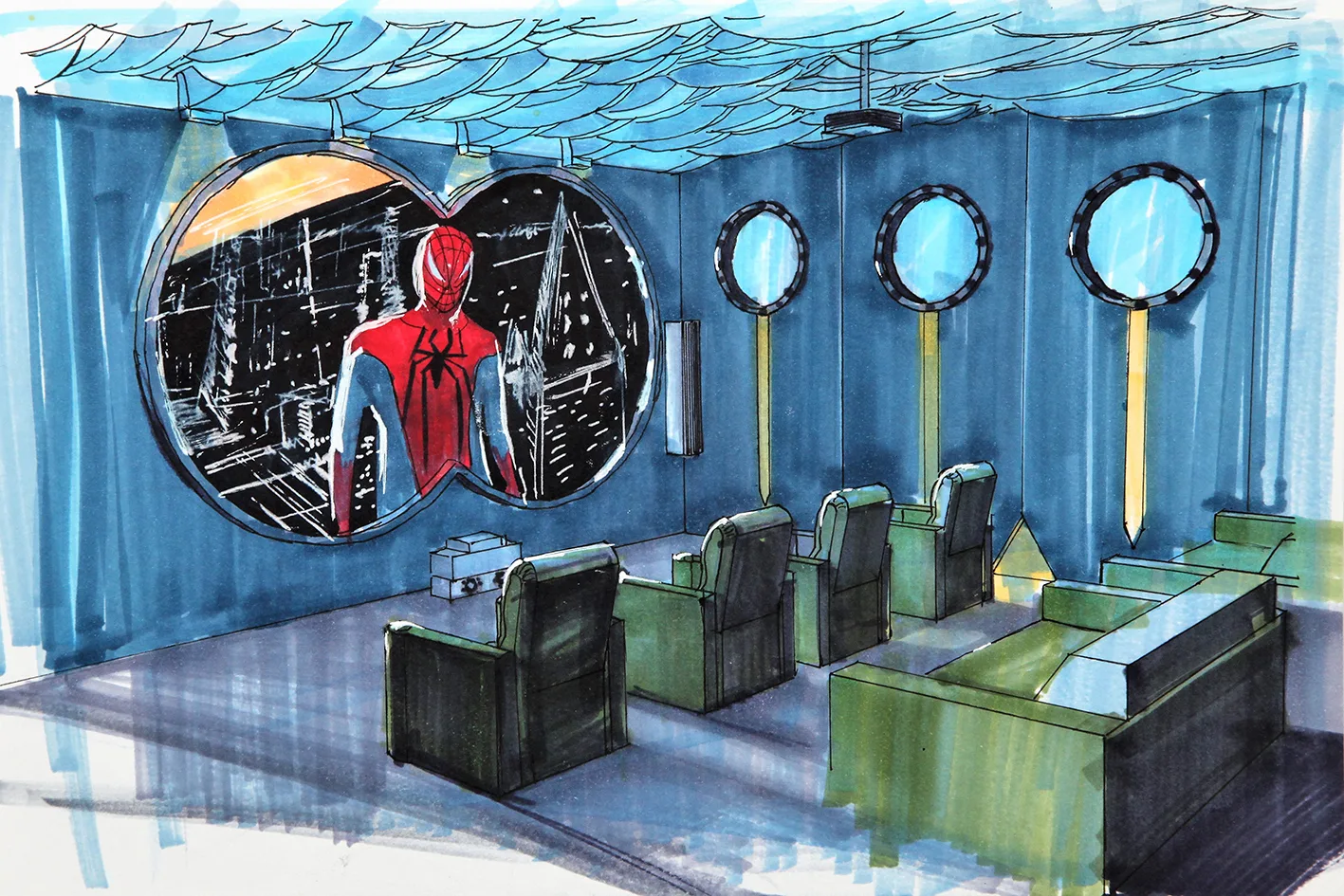 Interior DesignPortfolio Development
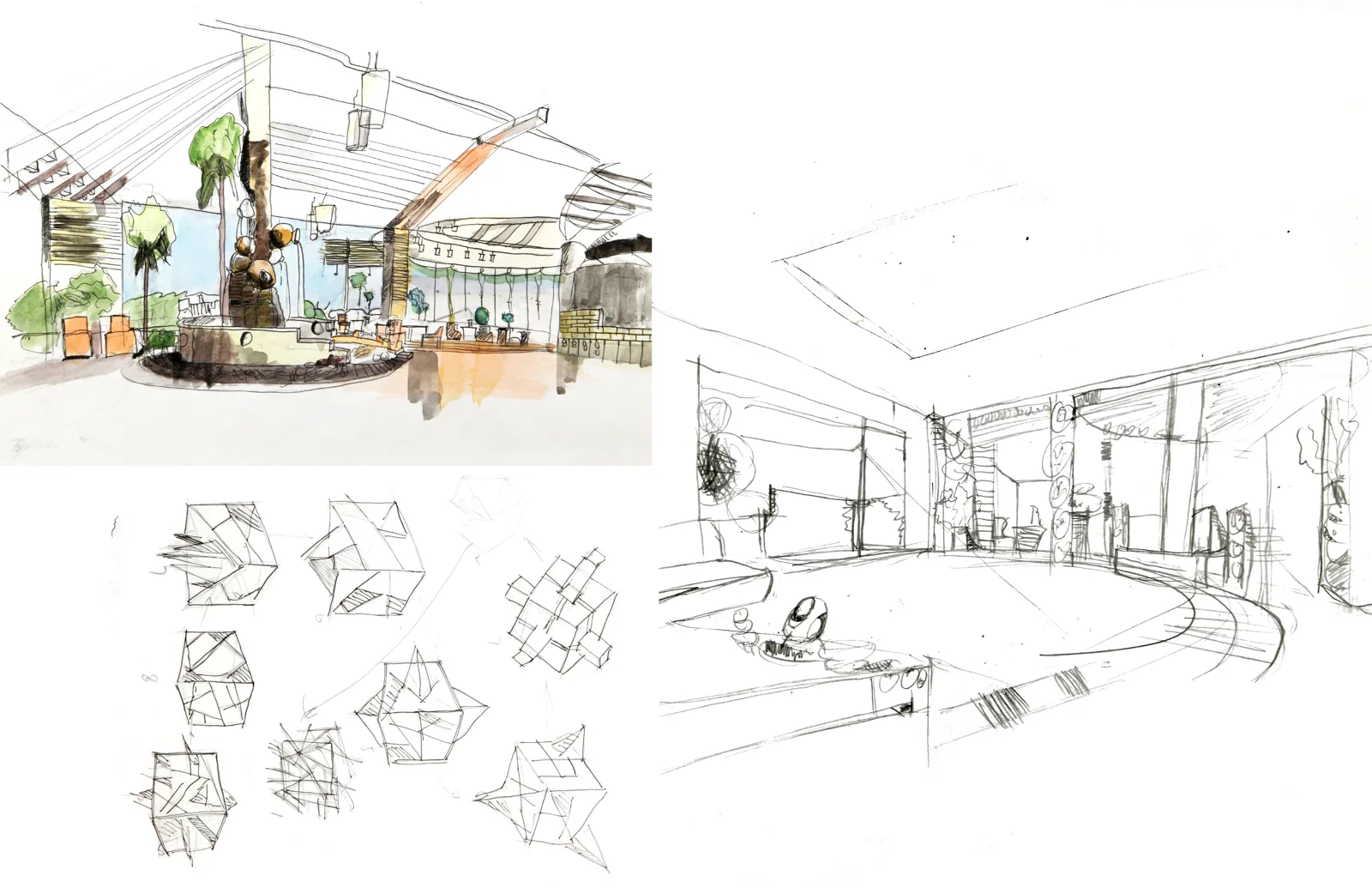 Interior DesignPortfolio Development
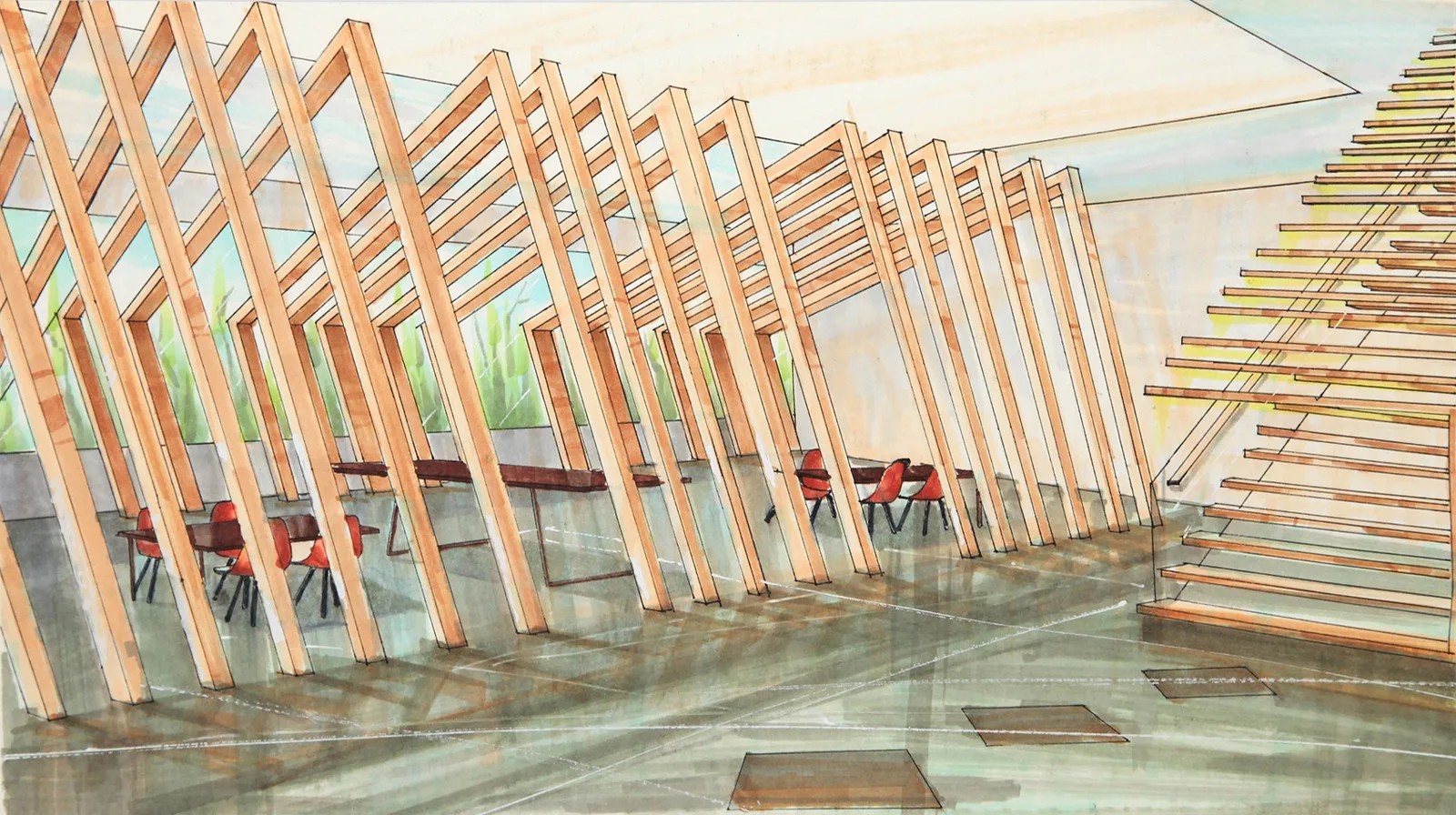 Interior DesignPortfolio Development
Start with a portfolio assessment
Portfolio and AP tracks are by enquiry only. We look at your goals and current work first, then plan the course and hours around you.
Common questions
What should an interior design portfolio include?
Many programs want a mix of observational drawing, original design projects and evidence of process, such as sketches, plans and material studies. Some also welcome fine art pieces. Check each school's current guidelines for format and number of pieces.
Do I need to know design software before applying?
Usually not. Most programs teach software after you enrol and care more about your ideas, drawing and spatial awareness. Basic digital skills can help with presentation, but hand sketches and models are still very persuasive.